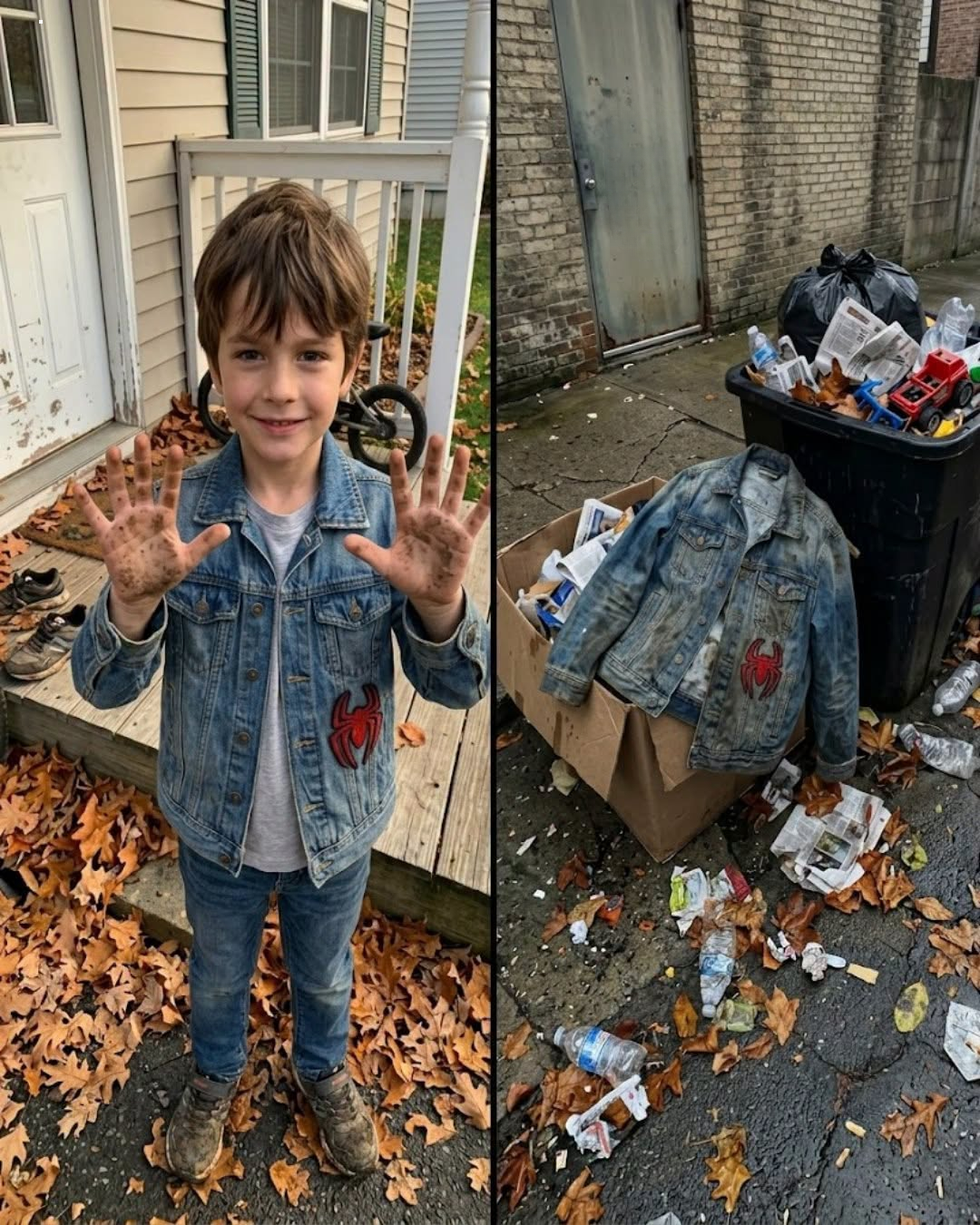
The phone buzzing on Diane’s kitchen counter transformed the entire nature of the last three weeks.
Up until that moment, I had been trapped in one dreadful possibility: Noah had vanished somewhere along six ordinary blocks.
Perhaps someone had stopped beside him.
Maybe he had taken a different route.
Or he could have followed someone he trusted.
Every search had commenced with the belief that my son never arrived at his destination.
Diane had just shattered that belief.
Noah had reached her home.
She had seen him.
She had concealed his backpack.
And the clothes he wore were in her trash.
I reached for the phone before Diane could.
She seized my wrist.
“Please.”
I had never heard her voice sound like that.
Not defensive.
Not furious.
Terrified.
I freed my hand.
“Tell me who has my son.”
Diane averted her gaze.
“His father.”
The room felt as though it tilted.
Noah’s father and I had been apart for years, but separation was never the core issue.
The issue was that he had always perceived boundaries as insults.
If I said Noah needed to be home Sunday night for school, he interpreted it as control.
If I inquired about their destination, he perceived it as an accusation.
If Noah wished to call me during one of their visits, his father somehow made the phone inaccessible.
Eventually, each interaction devolved into a dispute over one simple concept: being Noah’s father did not grant him the right to do whatever he pleased with him.
Their contact had become restricted.
Diane despised that.
She was his mother, and in her version of every conflict, her son was misunderstood and I was the woman keeping a boy from his dad.
I had trusted Diane anyway.
That was the aspect I would resent myself for the longest.
She had babysat Noah while I worked late.
She had stocked his favorite cereal in her pantry.
She remembered which pizza toppings he picked off and which superhero movies scared him even when he pretended otherwise.
I had given her something more precious than a house key.
I had granted her access.
And she had exploited it.
Diane told me Noah arrived at her porch shortly after six that Friday.
He had been proud of walking by himself.
He apparently chatted the entire way through the door about how I had finally stopped treating him “like a little kid.”
Diane offered him something to drink.
Then she mentioned there was a surprise waiting.
His father entered through the back door.
I remember staring at Diane as she said that.
Not weeping.
Not yelling.
Just staring.
Sometimes rage comes too immense for sound.
Diane insisted she believed it was meant to be a brief visit.
Noah’s father had told her he wanted a few private hours with his son without me “interfering.”
He assured Diane that Noah would spend the night at her house afterward.
He promised nobody would find out.
That should have been sufficient for her to refuse.
Instead, she assisted.
When Noah saw his father, he was ecstatic.
That reality hurt in a way I cannot articulate without sounding cruel, because, naturally, he was thrilled.
He adored his dad.
Children do not stop loving people just because adults have learned not to trust them.
Diane said his father had brought a grocery bag filled with different clothes.
He referred to it as part of their “adventure.”
Noah changed out of his blue jacket, hoodie, T-shirt, and sneakers.
His father gave him another sweatshirt, shoes, and a cap.
Then he took Noah’s phone.
He switched it off.
The backpack remained behind because the tablet could be tracked once it connected somewhere.
The plan, Diane claimed, was for them to return later that evening.
They never did.
At seven o’clock, when I called to ask how Noah was doing, Diane already sensed something was amiss.
She had called her son several times.
No response.
She could have informed me then.
She could have alerted the police twenty minutes later.
She could have told the volunteers walking beneath her windows while calling Noah’s name.
Instead, she lied.
“He never came.”
Those three words sent an entire community searching in the wrong direction.
Investigators concentrated on the sidewalks between our homes.
They reviewed footage looking for Noah in his blue jacket.
They asked residents if they remembered seeing a child with a backpack.
Meanwhile, the jacket and backpack were already inside Diane’s home.
I questioned her why.
Her response was nearly worse than the lie.
“At first, I thought he’d bring him back.”
At first.
Then one hour became a night.
A night turned into a day.
By Saturday afternoon, Diane understood her son had taken Noah intentionally.
She still said nothing.
She claimed she was afraid that admitting her involvement would land her own son in jail.
I laughed when she said that, although it was nothing to laugh about.
“You were protecting your son.”
Diane covered her face.
“I was scared.”
“So was Noah.”
That silenced her.
For the first time, she looked directly at me.
I held up the jacket.
“And while you were deciding which adult to protect, everyone was searching for my child.”
Diane told me she had hidden Noah’s things in the back of the hallway closet.
When police searched the house during the early days, she had moved the backpack behind stored blankets after officers initially checked the room.
The clothing went into a bag in her garage.
Weeks later, convinced investigators were no longer returning regularly, she attempted to dispose of it.
That was when I discovered it.
Not fate.
Not intuition.
Trash day.
A piece of blue fabric peeking out from beneath a lid.
The crooked Spider-Man patch I had sewn poorly enough to recognize from twenty feet away.
I instructed Diane to give me her phone.
This time, she complied.
The latest message was from Noah’s father.
It stated he needed more money.
There were older messages too.
Enough to eliminate every remaining possibility that Diane had been merely confused.
She knew.
She had been in contact with him after Noah vanished.
Some messages were brief.
“Is he okay?”
“Please bring him back.”
Others were worse.
“Police searched again.”
“Don’t call here.”
“They’re checking cameras.”
My hands trembled so violently I nearly dropped the phone.
Diane had not only withheld the truth once.
She had continued providing information to the person concealing my son.
I called the investigator assigned to Noah’s case.
I did not explain everything.
I simply stated that I was inside Diane’s house, I had found Noah’s belongings, and Diane had admitted he had been there.
Then I handed them the phone.
Everything changed after that.
The search shifted from being about a missing boy who had vanished from a sidewalk.
Now investigators had a known departure point, a known adult, messages, property, and a grandmother who could no longer pretend she was unaware.
Diane was separated from me while officers questioned her.
I sat on her front steps with Noah’s jacket across my knees.
The evening air carried the scent of freshly cut grass and someone’s dryer vent.
A dog barked two houses down.
Cars drove by.
Ordinary life continued with an almost offensive regularity.
I rubbed my thumb across the uneven stitches around that patch.
For three weeks, I had loathed those six blocks.
I had blamed every corner.
Every driveway.
Every place I might have overlooked something.
But Noah had completed the walk.
He had done exactly what I had asked him to do.
The failure occurred after he reached someone I trusted.
The messages on Diane’s phone provided investigators the breakthrough they required.
Noah’s father had been on the move because he was aware people were searching for him.
He had told Noah that the trip was temporary.
Then he claimed I knew about it.
When Noah began asking to call me, the story shifted.
According to what Noah later recounted, his father said I was angry and needed “time to calm down.”
Then he warned Noah that police would separate them if he attempted to contact anyone.
A ten-year-old does not perceive manipulation the same way an adult does.
He hears his father saying that calling his mother might worsen everything.
So Noah waited.
He asked questions.
He cried at night.
He counted the days.
And every time he inquired about when he could return home, he received another answer.
Tomorrow.
After the weekend.
After things settle down.
Soon.
The messages and payment records eventually narrowed the search to a roadside motel outside our immediate area.
Police found Noah there.
Alive.
Fully clothed.
Scared.
Confused.
But alive.
The call came before sunrise.
I had envisioned that call hundreds of times.
In every scenario, I collapsed.
I screamed.
I thanked God.
I dropped the phone.
What actually occurred was much quieter.
The investigator said, “We have Noah.”
I sank down onto my kitchen floor.
Then I asked, “Is he alive?”
“Yes.”
“Is he hurt?”
Nothing serious, I was told.
I pressed my forehead against the cabinet and made a sound I had never heard come from my own body.
When I finally saw him, Noah appeared smaller than he had three weeks earlier.
That was impossible, of course.
Children do not physically shrink from fear.
But something about the way he stood in the doorway, shoulders hunched inward, made him seem five again.
He spotted me.
I spotted him.
Then he ran.
I barely had time to open my arms.
He hit me so hard we nearly both toppled.
“Mom.”
That was all he said at first.
Just Mom.
Again and again.
I held the back of his head and told him I had searched for him every day.
He pulled back just enough to search my face.
“Dad said you knew.”
“No.”
His mouth began to tremble.
“He said you said I could go.”
“Noah, I never said that.”
That was when he cried.
Not the loud sobbing I anticipated.
His whole face simply crumpled, and he buried it against me.
Later, he recounted arriving at Diane’s home.
About seeing his father.
About changing clothes because Dad said it would make the trip more enjoyable.
About leaving his jacket because he thought he would wear it again when they came back.
The clothes in Diane’s trash had never belonged to a dead child.
They were evidence of a living child being intentionally made harder to identify.
That was the answer the jacket provided me.
Noah’s father had taken him from Diane’s house with her assistance.
Diane then lied about Noah arriving, concealed his belongings, maintained contact with her son, warned him about the search, and eventually attempted to dispose of the clothing that proved her story false.
The consequences were not immediate cinematic justice.
There was no dramatic courtroom speech that rectified what happened.
There were interviews.
Statements.
Evidence bags.
Phone records.
Hearings.
Noah’s father was arrested, and prosecutors filed charges related to taking and concealing Noah.
Diane also faced legal repercussions for her role in hiding the truth and assisting after he disappeared.
She once attempted to send me a letter.
I returned it unopened.
People later inquired whether I believed she deserved forgiveness because she had eventually cooperated.
I stopped responding to that question.
Forgiveness is personal.
Access to my child is not.
That distinction became permanent.
Diane lost hers.
I altered our routines, tightened every pickup arrangement, and ensured nobody could ever again use the term “family” as a substitute for permission.
Noah began counseling.
For a time, he slept with the hallway light on.
He checked that I was home before going to bed, even when he had seen me sit down on the couch just five minutes earlier.
The first few times he walked anywhere without me, his hand kept drifting toward mine.
I never mentioned it.
I simply left my hand where he could reach it.
Months later, he needed a new jacket.
At the store, he rejected three perfectly good ones before selecting another blue jacket.
When we returned home, he handed me a Spider-Man patch.
“Can you sew it on?”
I told him my stitching was still terrible.
He smiled for the first time that day.
“Good.”
Then he tapped the corner of the patch and said, “Make him lean into the wind again.”
So I did.